
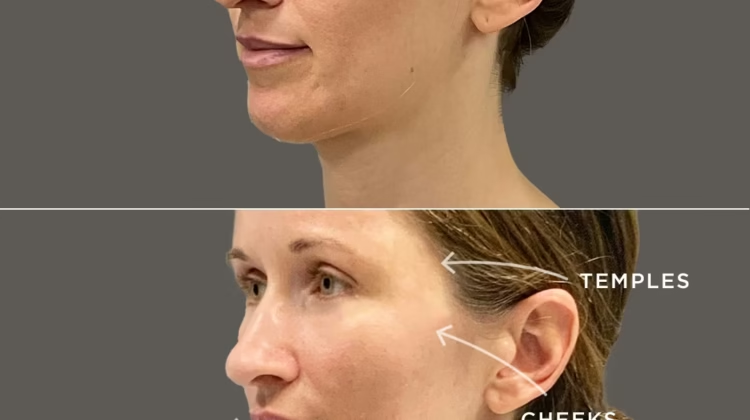
The Science Behind Fat Grafting and Its Advantages
Fat grafting, also called autologous fat transfer, is a technique utilized in breast surgery. Unlike implants, which rely on synthetic materials, fat grafting uses the body’s own adipose tissue. The procedure reduces rejection risks, and it may produce results that feel natural. Here is more information on the science behind this procedure and its advantages for breast surgery patients:
What Is Fat Grafting?
Fat grafting is a surgical procedure that relocates fat from one area of the body to another. Surgeons may use it in breast augmentation, reconstruction post-mastectomy, and corrective procedures, and the technique draws on the body’s own biological material. Since it uses the body’s own tissue, results may look and feel more natural than implants alone. For reconstructive patients, this procedure offers a reliable method for restoring volume and correcting irregularities.
How Does It Work?
Fat grafting relies on the survival of transplanted fat cells, which are known as adipocytes, within their new environment. When fat is injected into breast tissue, these cells establish a new blood supply, and this is key for long-term survival. Not all transferred fat survives.
Fat tissue contains adipose-derived stem cells, and these cells play a central role in the graft’s success. Because adipose-derived stem cells support tissue regeneration and promote new blood vessel formation, they help improve the overall viability of the transferred fat. They also offer regenerative properties.
What Does the Process Involve?
This procedure begins with liposuction. A surgeon extracts fat from a donor site, which may be the abdomen, thighs, or flanks, and the harvested fat is then processed to remove fluids, damaged cells, and impurities. This leaves behind purified fat that is ready for transfer, and this processing stage impacts both graft quality and survival rates.
Once the fat is purified, it is injected into the breast in small, evenly distributed amounts using a fine cannula. Surgeons may use multiple injection passes at varying depths; this maximizes contact between the fat and surrounding tissue to improve blood supply access. The procedure is performed under general anesthesia.
What Are the Advantages?
One of the primary advantages is biocompatibility; the fat originates from the patient’s own body, so the risk of allergic reaction or rejection is lower than with synthetic implants. Additional benefits include:
- Results integrate with existing breast tissue, creating soft, natural contours
- Scarring is minimal, as the procedure requires small incisions for the cannula
- The technique allows for precise, incremental volume adjustments
This procedure may also offer a favorable safety profile when performed by an experienced surgeon.
Learn More About Fat Grafting
Fat grafting is a scientifically grounded procedure that uses the body’s own fat to enhance or reconstruct breast tissue. The technique works by transplanting purified fat cells, which establish a new blood supply, and they may integrate naturally with surrounding tissue. For breast surgery patients, the advantages include natural-looking results, lower rejection risk, and minimal scarring. To determine whether this procedure is the right option for your specific needs, consult a plastic surgeon. They can assess your anatomy and surgical goals.
