
CT Scans and Their Role in Emergency Medicine
Medical imaging allows doctors to examine the body without the need for surgery. Among the most widely used tools is the CT scan; this is a technology that produces detailed pictures of internal structures. People may encounter this type of imaging for certain situations, such as after an injury, during the investigation of unexplained symptoms, or as part of a broader health assessment. Knowing what a scan involves can help you feel more prepared if your physician recommends one.
What Is a CT Scan?
CT stands for computed tomography; a CT scan is a diagnostic imaging method that combines a series of X-ray images taken from different angles. A computer then processes these images to create cross-sectional views, often described as slices, of bones, blood vessels, organs, and soft tissues. Standard X-rays produce flat, two-dimensional pictures. These scans go a step further by layering many images together, which can give medical professionals a more complete view of the area being studied.
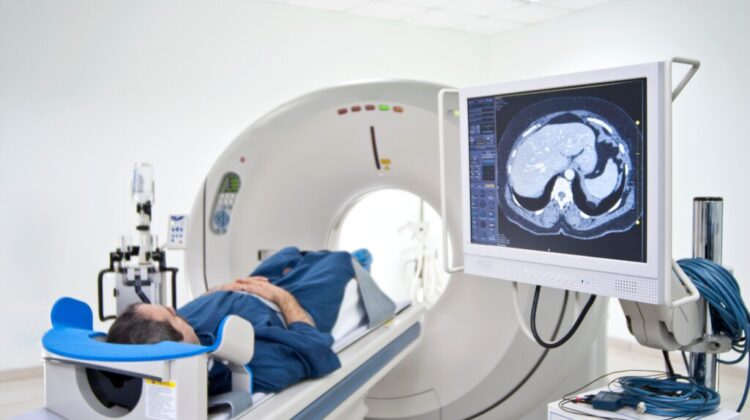
These slices may be combined to form three-dimensional models; this added detail allows physicians to see structures that overlap or remain hidden on a single X-ray. CT scanners are large machines with a circular opening in the center. During the procedure, the patient lies on a motorized table that moves slowly through this opening. The process is generally quick and does not require any incisions, which makes it a noninvasive way to look inside the body.
How Does It Work?
A CT scan relies on X-ray technology paired with advanced computer processing. Inside the scanner, an X-ray tube rotates around the patient. Each rotation of the scanner captures a thin slice of the body; the table advances gradually so that the machine can build a full picture of the region under examination. In certain studies, a contrast agent may be used. This is a special substance that helps highlight specific tissues, blood vessels, or organs. Contrast helps to make particular areas stand out more clearly, and this can support more accurate outcomes. Patients are usually asked to remain still, and in some cases to hold their breath briefly, so that the images stay sharp and free of blur.
What Is It Used For?
CT scans serve many purposes across different areas of medicine. Physicians frequently use them to examine injuries; the images can reveal fractures, internal bleeding, and damage to organs. In emergency settings, the speed of a scan may make it a practical tool for assessing trauma quickly.
Beyond injury assessment, CT imaging supports the study of the chest, abdomen, and pelvis. It can help identify unusual growths, inflammation, infections, and other changes within the body. Doctors may also use a CT to monitor known conditions over time, and this helps them track how an area responds to a chosen treatment plan.
Seek Professional Radiology Services
A CT scan gives medical professionals a detailed window into the body, and it supports accurate evaluations and informed care decisions. Trained radiologists interpret these images and share their findings with your physician, who then explains what the results mean for your situation. Understanding the process can help you approach it with greater clarity.
